

Today’s interview is a surprisingly impactful one because it’s not solely about how businesses can help make the world a better place by supporting charities, it is also about how creating the right strategic charity partnership can have a profound impact on the business itself. Helping to differentiate our brand, attracting and retaining customers, engaging your existing team.
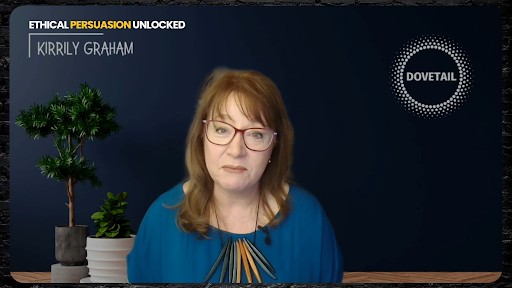
And even make your organisation more attractive to talented people looking for somewhere that they can be proud to work. My guest today is Kirrily Graham, founder of Dovetail, a certified social enterprise and B Corp that helps small and medium-sized businesses achieve their goals through strategic partnerships with grassroots charities.
Kirrily brings an extensive commercial experience across sales, business development, learning and development, and other sectors, together with more than 20 years of experience volunteering and working in the charity sector. In one charity alone, she helped grow them from a turnover of $200,000 approximately to about half a million dollars while working with them in a part-time capacity.
Today she brings those two worlds together, helping businesses move beyond simply making donations to charities, but creating partnerships that generate greater social impact while also supporting genuine business objectives. But before we get into my conversation with Kirrily, I want to point out something that particularly fascinates me about this topic.
When we support a cause that your customer or prospective customer or employee also cares deeply about, you’re working towards a common goal. That creates similarity and activates the principle of liking.
When your contribution produces something positive for someone’s community, supports a cause that has touched their family, or perhaps even helps them to address a problem that’s affecting them personally, reciprocity can come into play. You’ve done something meaningful for something that they care about, and that makes reciprocity personal rather than simply transactional. Then there is unity.
When your involvement communicates that ‘We are the kind of people who care about this’, you’re not asking someone to become a different kind of person. You’re giving them an opportunity to recognise something of themselves in what your business already stands for. And because unity operates at a level of shared identity, that connection can extend well beyond an initial transaction.
There’s also social proof. When people see others like them choose to support or buy from a business that contributes to a cause that they care about, that behaviour itself provides information about what other people like them choose to do. The same thing can apply to prospective employees. Seeing people who share their values proudly.
Choosing to work for a business can make joining that organisation more attractive.
A genuine relationship with a respected charity can also activate authority and provide us with credibility and trust, particularly when someone is still uncertain about your business. The fact that an organisation they respect is prepared to associate its name and reputation with your business can provide an additional signal of trustworthiness.
But perhaps, one of the most interesting effects is pre-suasion. A prospective customer may discover your involvement with a charity before deciding whether to want to engage with you, listen to you, or buy from you. A potential employee may discover it before deciding whether or not they would consider working for you.
This not only changes the psychological environment in which everything that follows is considered, but it also makes people more willing to receive your communication and be more open to your message. Without pre-suasion, reciprocity, unity, liking, social proof and authority might never have a chance to work at all.
And here’s what makes this particularly interesting. None of this requires doing good for the purpose of influencing people. The social impact can be entirely genuine. But when that good is communicated appropriately rather than hiding it because we’re frightened that we might appear to be bragging about it, there can be very real benefits for everyone involved.
And that’s exactly what Kirrily and I are going to be exploring today. How business can move from simply making donations to creating strategic partnerships in which the charity benefits, the community benefits, and the business can grow as a result.
Welcome Kirrily. Great to have you here. I’m excited about this topic. Of course we want to do good and help people and that makes us feel good and we can have a positive impact on charities, but there’s also elements in there that you know in a nice way we can also benefit from as a business. And so I’m very keen to dive into this with you and hear about your expertise.
Now you’ve been working in the commercial sector for a while. You’ve not just been working with charities. Can you elaborate on your history and how you’ve got to where you are now?
Kirrily Graham (07:44)
Absolutely and thanks Patrick for the invitation. It’s an absolute pleasure to be here with you today. So my background is quite varied. It was an accidental career change, which is very, very common in the charity sector. And I did come from a commercial background. I’ve worked in hospitality and learning and development. I had a learning and development business before sort of launching myself into the charity sector full time.
But a big part of my world has also been in sales and business development. And it was sort of during that time of having my own business and doing a lot of sales and business development that I started to be involved with a charity in a voluntary capacity. Started volunteering with them, ended up on the board, and then later on taking on some more sort of senior roles to help them grow and scale the organisation. And that was always this side hustle that I did for a very long time.
But I really enjoyed it and had the benefit of seeing that organisation grow quite significantly from around $200,000 turnover to about $500,000 over a few years. And that’s where a lot of my experience and a lot of my lived experience and passion comes from now to be working in this sector because what I saw and experienced was that so many smaller charities that are around don’t really relate to themselves like a business.
And so that’s where I saw that there was a real missing and bringing those sort of skills and services into the charity to help them scale. Things like marketing, having a decent website, being able to do regular communications to your supporters and donors, having good financial systems in place so that you can, you know, manage your finances well. There are a lot of smaller charities just don’t start with all of those basic, business processes and systems in place.
Patrick van der Burght (09:39)
Right.
giving or making donations? I mean, that’s easy. You can find websites, you can transfer money and done. What’s the difference with actually have a s having a strategic partnership with the charity?
Kirrily Graham (10:21)
Yeah, well if we’re talking about it from a business perspective, then there’s so much value that really does come from creating a more formal, partnership or support for that organisation. It doesn’t always have to be financial, but of course charities always do need cash. Cash is king. And it’s something that where you can build that relationship with an organisation. I think you really get to see and experience the difference that you make. It’s
very easy to make a one-off donation to an organisation, but you quite often don’t really get a sense of the difference that you’ve made with that money. And so I find that you know when you build a strategic relationship, you can really focus on, what’s the difference that you can make to that organisation and it will be a lot more significant. As well as there’s a lot of benefits that actually come back to the business. And this is something that I think the small business sector in particular, which is the area I work in.
Really misses a lot of opportunities. So in the corporate world we have what’s known as corporate social responsibility or ESG, which is environmental, social and governance. And they’ve been doing that for decades. Something that’s been in practice for a long time. And it is something that is, you know, in some of the banks they’ll have a whole department, for this area because there is a commercial value that comes back to the business.
And businesses that do this, and there was a recent Deloitte study that was conducted during COVID, shows that it can improve your attracting and retaining great employees, you can have better team productivity, you can attract and retain clients as well, and there’s also the value it can bring to your brand when you’ve got a really good alignment. Now all of those have an impact on your bottom line.
[chapter time="12:32" title="Beyond Financial Donations" thumb="https://ethicalpersuasion.com.au/wp-content/uploads/2026/09/ep21-frame5.jpg"]And so if you have a strategic partnership that is actually, and it’s not something that happens overnight, but you know, you have that relationship and partnership there for a few years, that can really make a big difference to your business and to your bottom line.
Patrick van der Burght (12:33)
Okay. And besides financial donations, might there also be other things other than finance that a business can assist a charity
Kirrily Graham (12:42)
Yeah.
Patrick van der Burght (12:43)
with?
Kirrily Graham (12:43)
Absolutely. There’s, you know, just the fact that you might have that partnership could particularly if it’s a small organise, smaller grassroots organisation, that can really help raise their profile as well. So there can be a lot of value for the charities and community groups that you work with to, raise awareness about the great work that they do if you’re
putting it through your website in your social media and newsletters and that. So that can make an incredible difference just because a lot of these small organisations don’t usually have a lot of budget for marketing themselves. But they might also get a lot of value from products or services that you have. So if you’ve got professional services, you might be a social media marketing business, you might be a business consultant, those
services may be of real value to the organisation as well. So you might want to offer those pro bono or what we also call low bono, so at a a very discounted rate. And there might also be opportunities if the organisation is doing fundraising events that you’ve got a product that you can give to them that they might be able to raffle or you know have a silent auction item and raise some cash, from those items. So yes there can be lots of different ways in which you can, support the organisation that are sort of non-financial as well.
Now, something that that I know you’ve identified and see happening a lot is that businesses might do, great work or make donations to charity, but they’re uncertain on how to communicate or they feel like they’re bragging or doing something wrong if they let other people know that they support charities. Can you elaborate on that why that’s why that’s something that’s not really necessary?
Kirrily Graham (14:35)
Yeah, it was a really interesting exercise before I started Dovetail. I did do a bit of market research and it was a really common barrier that came up that people quite often said,
“No, it’s fine, we do it, but we don’t need to talk about it. We’ll just keep that private.”
And I think that’s a bit of an very Australian thing. It’s a little bit of the tall poppy. And there can be a bit of a concern that people might think that they’re virtue signalling, that they’re sort of bragging about something or
“Hey, look at me, how
good am I that I’m doing this fundraising and donating.”
But the reality is that consumers today and in Australia, four out of five consumers would prefer to buy of businesses that are doing good in the world. You know, the ones that are looking after the environment, they’re giving back to community, they’re making sure that their products and services don’t harm people and planet. So if those people are out there looking, it’s four out of five consumers.
But what the studies actually show is that three out of four can’t tell you brands that are doing that. So there is a massive gap between what people are looking for and what they can actually find in the marketplace. So massive gap to me is a massive opportunity. So if you are a business, particularly in an area where it’s a flooded marketplace, there are a lot of what a lot of other businesses that offer your service, it’s a really great opportunity to stand out and differentiate yourself
to you know your competitors. But one of the other things that I think it really demonstrates as well is your values. It’s a way that your values are translated from being a couple of words on a wall that you did in a workshop to how you actually work as an and operate as a business and that should be right through your business, with your staff and how you look after your customers. So when you have a charity partnership and you can bring that sort of program into your business, you’re actually demonstrating
the values that you have. And that’s what people really connect with.
Yeah. And so this this can help us with customer acquisitions and people preferring your businesses over others. Now, of course,
Kirrily Graham (16:43)
Yeah.
Patrick van der Burght (16:44)
there is a difference between someone saying that they would prefer something and actually acting on that, right? One of the things about persuasion science is that people often don’t act in line with their values. They say they do one thing and then it happens and they do something totally different. But you’ve of course been in this for a long time.
So are there some examples you can think of where, in terms of you know acquiring customers, it has a big impact on a business?
Kirrily Graham (17:14)
Yes, look, I think it is very much that you when you’re speaking to customers and customers are buying from a particular business, there’s a real pride that comes from that. And that’s something that is it translates into making you quite referable as well.
So it’s you know, we have quite a few clients who are working with an organisation that’s in the homelessness space. It was Homelessness Week in last month. And you know, there are businesses that actually offer to provide a certain amount of like five or ten nights accommodation when their clients purchase with them. And they then invite their customers to co-contribute. And the success rate on those is generally around 50% – 60%
of customers will actually co-contribute when the business has actually made a donation from the service that they’ve provided them. So yeah, we do see that and that’s a fairly consistent statistic that comes through when you’re actually putting your hand in your pocket people really you know endorse that and that’s a values alignment and they’re really happy to co-contribute with that as well.
Yeah. And I there it would also form, you know, for those who’ve been listening to this podcast before, it will also create a unity bond. If you have an a tendency to support a charity or to do good work in a particular area and somebody identifies with that, then you know, they feel that they’re part of that community, which would create more
Kirrily Graham (18:56)
Mm.
Patrick van der Burght (18:57)
favouritism towards the other party and more forgiveness as well. You know, in case, let’s say with our products or our services, we sometimes make mistakes.
It’s nice when people are more forgiving and just “You’ll fix it, you’ll be right”, they don’t move away from you so quickly.
Now, when we talked a few weeks ago, you also mentioned how this doesn’t just impact on how people might identify more with you and therefore favor you know buying your product or service, but it also has an impact on
people considering to work for you. Often larger organisations,
Kirrily Graham (19:38)
Yeah.
Patrick van der Burght (19:40)
might be seen as more stable or more attractive to work for, and people might consider less so to work for a smaller organisation, and that the involvement of charities might actually get us some very high quality employees which might have otherwise not considered us. Can you tell us a bit of a story about how that might have happened?
Kirrily Graham (20:02)
Yeah, absolutely. It’s actually something we hear quite often as well. And a lot of employees the numbers between what consumers are looking for is really similar to what employees are looking for. And quite often employees may leave a business, even though they might want to work for a bigger company, they think it’s more stable, again if the values aren’t aligned, then there’s a real, misalignment for them.
That won’t sit well. And so they will go out looking for other organisations that you know that where that is that values alignment and they feel a lot more connected. And I think that there are so many businesses out there that I come across within the B Corp community that have and social enterprises and businesses that are doing a bit of good where I have the conversations with people
that’s something that it they’re really proud of. I recently went to an interview actually with a marketing and branding organisation here in Melbourne. And I noticed when I walked in the door they had a B Corp symbol on their business. And I went in and said, I’m a B Corp as well. And they both sort of sat up, their shoulders went back and they said, yeah, we love that. And they were so proud of the fact that they worked for a B Corp.
And for those that are listening and don’t know what a B Corp is, please do a bit of research on it. They are organisations that have actually gone through a very rigorous process to show and demonstrate that they look after people and planet. And it’s it’s quite a big deal to go through that certification process. And it makes sure that your business is operating ethically, that you look after your customers, that you look after your employees, that you have really great governance in place.
And that you’re not harming, the environment or people in that, in your whole supply chain. So, you know, it’s a bit of work to get there, but the people that work for those organisations have immense pride. And so, again, it’s a way that you’re showing as a company that you have certain values that you really live by day by day. And so employees really do honour that and they have a lot of pride around that. And when you’re looking at the
I suppose those generations from millennials down, that is even more prominent in those age groups. So it is something that you really do need to look at if you you know, if you’ve got a workforce that is and teams that are of that age demographic, this is really, really important to them.
Okay. And do employees sometimes also sort of get more active and involved with the actual charity? Does that happen?
Kirrily Graham (22:52)
Absolutely. And you know, when we’re working with our clients, we always look at how can we align this charity partnership to your business goals. So what are the things that are happening in your business? You might have some pain points, you might actually be struggling to find new employees, it’s quite a tough market out there at the moment. So, you know, if there’s a particular goal for that business to grow and scale, they need to build their team or they’re finding it quite difficult to get employees because of the market at the moment.
Then we create some activities that are around that. We have a property and real estate company that we’re working with at the moment, and they’ve got teams that are spread across the eastern seaboard of Australia. So it’s a lot of remote teamwork. And they also are quite because they’re remote but they’re also across different states, they really wanted to build something in that was going to bring them together as a team and was going to help break down those sort of different divisions of the business.
So part of our strategy in working with them was to have activities that are going to bring the team together. They’re going to be doing a challenge with one of the charities where they’re all going to be taking on something that’s what we call an uncomfortable challenge. It’s a Nedd’s Uncomfortable Challenge with the ‘We Are My Mobilise’ charity. And it’s something that all the teams can participate in, right across, all of the cities that they operate. And they can have a bit of fun with it, make it little bit competitive
and it’s a way to sort of get them all involved in something that’s not just, your regular day to day work.
Sounds great. Now what we need to circle back to is how do people communicate that they’re doing good. We touched on that before.
Kirrily Graham (24:33)
Yeah.
Patrick van der Burght (24:34)
People are a little bit hesitant to maybe broadcast that. And and I guess, what’s too much? You could be, communicating that you’re benefiting and helping and assisting charities. And I think it’s okay that
this is a it’s like a reciprocity situation, right? We help the community and that’s okay for people to know that that our values align and that there’s some benefit comes to us from that. But there must certainly also be a line where people might be thinking that you’re trying to milk it. So how do people communicate in an ethical and yet also effective way that, we are doing good for the community?
Kirrily Graham (25:24)
I think the one of the sort of really critical factors in that it’s not just about like you as an individual, as a business owner, it’s not about you personally. This is something that you’ve built into your business. And having it aligned to some of the things, some of the goals, some of the practices, the behaviours that you want to have in your business. That alignment can really make a difference
and how you communicate that then really translates I suppose because we’ve got you know like I mentioned before some real estate people and say a buyer’s advocate and you know when they sell a home on behalf of a customer or they’re finding a home on behalf of one of their customers. They’re donating five nights accommodation for instance. Now you can communicate that it’s not about you it’s actually about your customer
in that instance. Your customer has actually enabled you to be able to do that by working with them. So when you’re communicating that out to your, database or out on your social media channels. It’s a really great opportunity to make your customer the hero in that story. You also could make the the charity the hero, you know, in that story as well. So
that’s what ultimately you’re doing it for is and I do believe that, the people we work with genuinely do care and they do want to make a difference. And it you just take the focus off yourself and put it on the people that are actually helping you to achieve that. I think that is a really powerful way to do it because it isn’t about you, it is about the difference that you’re making for the charities and your customers are the ones that are enabling that. Or it could be your team members, it could be the people that work for you.
But the fact that they’re actually getting on board with this and they’re gonna take on an uncomfortable challenge or they’re gonna go and do, you know, run a marathon or whatever it might be, whatever challenge they might do, they might even wanna do some salary sacrifice in there as well. So, there are opportunities that you can start to tell that story and I think that’s where we know today in marketing that storytelling is such a powerful thing.
That if you can tell that story about how that came about or how you were unable to do that, that what’s really resonates with people, when they’re reading those stories. And I think it also provides people with ideas and inspiration about how well gee,
“If I can do that, or they can do that, what can I do?”
You know, there’s ways that you might be able to think about what’s happening in your business that you could perhaps tie into a way that you can give back as well.
Part of what we do with our program as well is try to really make that something tangible. So, with having a night’s accommodation for somebody experiencing homelessness, that’s a very powerful thing to sort of people can understand and relate to that. So, whether it’s providing a personal care kit for somebody who is unemployed, providing this will provide somebody with a wardrobe for interviews so that they can be employed.
Those things that are very tangible can really help to tell that story. And so that’s a really important part of that as well, rather than just saying, yes, we’ve donated, you know, $10,000 or $2,000 to this charity, which doesn’t really resonate and and doesn’t really land and and impact people at a sort of personal level.
Patrick van der Burght (29:02)
Yeah. And I liked with the the example of of letting people know that, somebody, a client has made a purchase and that then flows onto something else in very gentle way.
It’s also a little bit of social proof that people are making purchases with you, which from a business perspective is of course also good when we see other people taking actions we would like other people to take, as in do business with you, buy your services.
Kirrily Graham (29:30)
Yeah.
Patrick van der Burght (29:30)
But it’s a nice
wrapped into a story you know it’ll have a deeper impact there as well.
Kirrily Graham (29:38)
Yeah, multi level.
If
somebody was to you know confront you with well i’m not sure if you know benefiting from working with charities that that’s appropriate. How would you sort of defend that?
Kirrily Graham (29:56)
Well, I think the way to that you could potentially look at that if you’re thinking about it that way. It’s probably a very limited way of thinking about it because we’ve got the opportunity when you have those relationships and partnerships with these charities and you’re helping them to grow and to do more of the great work that they do and you know, you’re helping them on that journey, you can also tell that story. Like I said, you can really it provide a lot of exposure for those organisations.
You’re also going to have some success from that partnership the more you grow the more the charity will grow the more awareness they get the more money that you can generate in your business. The more that you can contribute to those organisations that’s going to just help them grow so it’s really a win-win situation. And so I don’t see that there’s any problem with that at all and the charities don’t see that there’s any problem with that so
I think it’s just to be open-minded about it and explore it. It’s not something that happens overnight, but it is something that does happen. So, really think about who would be a good fit for you, what does actually align with your business, and think of it that it is really from the partnership, you know, that you are actually working together to help them grow by growing your business. And there’s so many examples of some very successful businesses,
larger businesses in Australia where this has worked incredibly well. And I saw an announcement just this week where we have
‘Who Gives a Crap Toilet Paper’ and the ‘Thankyou Group’.
And there was another one as well. That’s and the name’s just escaping me now. But ‘Humanitix’ that’s right. Three Australian organisations, they’re all operating with a social enterprise model and they give either 50% or 100% of their profits back to charity.
They’ve both contributed $20 million, they’ve hit a milestone of $20 million that they’ve contributed to their causes each, roughly at the same time, which is quite freaky. But that means that they’ve made a lot more than that. And they’ve had that from the very start of their businesses. When they started those organisations, they started with that intention of giving back some of their profits. And they’ve become very, very successful businesses. And in fact, all three of them operate globally.
So not just in Australia. So it is also a very smart, business strategy as well, if you wanted to, take that on.
Okay.
So what’s your process with your business of helping companies pick the right charity for them to partner with?
Kirrily Graham (32:47)
So we actually work with a range of pre-vetted charities. There is a bit of work that can go into doing that due diligence. And so we take that very seriously, when we when we decide to work with an organisation. But there is, some things that I think that are fairly critical. So if you are looking at this for yourself, the first thing that you might want to understand is what sort of organisation are they? Because
there are 65,000 registered charities in Australia, so there’s quite a lot to choose from, but they are all registered with the Australian Charities and Not-for-profits Commission, which is acnc.gov.au. They have to be registered as a charity. Now, there are not every not-for-profit is a charity, is a registered charity. So some the it’s good to just distinguish if it is actually a charity or just a not-for-profit.
Then there is also something that a lot of people don’t understand is that after they become a registered charity, they also have to go for what’s called DGR status, deductible gift recipientcy. And that means that the ATO designates them as a tax-deductible donator donation. So you can donate to any not-for-profit. That’s not a problem, but not all of them can be claimed as a tax deduction through the ATO.
So you do need to check that on the ABN register as well. So that’s a process to sort of go through those two steps. And then it’s actually one of the other things that we look at is what what sort of resources do they have internally? Unfortunately, you know, with 65,000 charities in Australia, the majority of them, about two-thirds of them, turn over less than $250,000 a year. So with those, they probably don’t have paid staff. Or if they do, it will be somebody part-time.
They probably don’t have marketing people. They may really not have a lot of resources to provide marketing support to you as well. So just do your due diligence, have a look and see. Have a look at their website, have a look at their social media, see what sort of stories they can tell about the impact that they’re making. And also look at what are the financial reports. You can get those off the ACNC website as well.
You can have a look at their financial reports as well. And just you know, look and see that the board meet on a regular basis, that they’ve actually their finances are looking fairly strong. If you might need to understand how to read a balance sheet and a P&L. And have a look at also if they have any sort of strategy in place. Do they actually have some sort of strategic plan for the organisation and how are they tracking against that?
Quite often organisations might talk about things that they do. We’ve been able to provide so many widgets to, a certain community or but what is the difference that that’s actually making for that community? What’s the story behind that? Why are they doing that and does that actually have an impact? So I think that sort of the impact stories are a really critical part from a business’s point of view, if you want to communicate those stories.
Patrick van der Burght (36:32)
So I’m assuming you make that process a lot easier for every
Kirrily Graham (36:36)
Yeah.
Patrick van der Burght (36:37)
party involved, right? It’s easier for the business to pick from a range of charities that you’ve already talked to and looked at. And perhaps with the charity it’s also much easier to get more out of that relationship, is that right?
Kirrily Graham (36:51)
Yeah, absolutely. Because the the organisations that we work with are on the smaller side, we sort of I call them the small but mighty. They’ve been around for a little while. They’ve got some really good proof track records, they are making an impact, but they’re kind of at that stage where they need a bit of investment to scale and take things up to the next level. And having sort of we actually do a lot of the business development, the relationship management on their behalf. We’re like their outsource
business development team to help go out and find those business partners for them. And then also help manage those. And our goal ultimately is that we get enough business partners on to help the organisations scale to a level that they can build that sustainable model and they’ll have those internal resources so that they don’t need us anymore. That’s ultimately where we’d like to get, with those organisations we work with. So yes, having support for the businesses where
we’ve done all the pre-vetting, we’ve got all of the resources that they would need, the images, the copy, the logos they can put on their website and their marketing material. But then ongoingly getting that feedback and those impact stories out to the businesses so they can tell the story. That’s the sort of support that we provide for the businesses on behalf of the charities. And then, of course, there are lots of other ways that businesses might need support in.
It could be in events, it might be getting involved in some of these, different physical challenges or charity challenges as we call them. So we support them in those ways as well.
Patrick van der Burght (38:30)
And why the particular interest in let’s say smaller charities rather than larger ones?
Well, my own lived experience, you know, I starting with volunteering with a small charity. I just saw how tough it is for them to actually break through to build a sustainable business model. And, I have been entrepreneurial and run my own businesses and going into this charity. I could see all the opportunities of what they needed to help scale, you know, putting in place
things like good accounting systems and marketing and you know a decent website, all of those things. And over time I realised how indoctrinated I got myself in my way of thinking about how a charity should operate because the expectations that we have, and I was absolutely guilty of this myself, that we we often think about charities in this way that we’ve got
somebody’s donated us $100, we’ve got to make sure that $100 goes to that person that really needs it. And not spending any money on administration or running an organisation or overheads as we use as we call them. We would spend as little as possible on that. Everything had to be donated, had to be done pro bono. And so this really I suppose scarce mentality came into place and it kept us really small for a long time.
And it was seeing this TED talk by a gentleman called Dan Pallotta, and it’s called “How We Think About Charities Is Dead Wrong.” And I saw this about 10 years, over 10 years after I’d been volunteering and working with a charity, and it was a light bulb moment for me hearing this guy, it was like he’d been inside my brain and just said so succinctly in 18 minutes,
what my experience had been. And it is very much that We expect charities to solve the world’s biggest problems, but we don’t want them to spend any money doing it. So we were operating in this space of trying not to spend money, but not really being able to fulfill on the goals that we had. And so shifting that thinking really made a big difference for me and really enabled us to scale because we started to actually
take on some bigger projects and take some risks and invest in, building the team and doing some marketing to the point that were able to sort of really grow that. And I saw that this is common right through all the charities. And as I mentioned before, that we’ve got two thirds of the charities in Australia, which is over 40,000 of them, turning over less than $250,000. And it’s because of this mindset that we have.
for charities, is what we call the social return on investment. So for every dollar that is donated, if you can actually identify what the return on investment is on that, that’s actually the thing that we should be looking at. Now, for charities to develop that, it can be a bit of a process and it’s expensive to do that, but that’s what we’re really committed to doing with the charities that we work with, is actually really enabling those things that are going to help them scale and grow and to bring the you know the best
social return on investment.
Patrick van der Burght (42:22)
Can you give an another example of a charity that you got involved with or, one of your clients got involved with and it really made an impact on how they, were able to do a lot more?
Yeah, well we’re still pretty early days at this stage. We’ve only been operating for around four years, but and these things do take time. But we did with one of the organisations, the homeless charity that we work with, they’re probably one of the a really great example because the people that first started this organisation started as volunteers doing outreach in the streets of Melbourne with the homeless community.
And they were very fortunate in that they got on an incredible person, Ned Brockmann, who they started working with. And he ran from Perth to Sydney and raised, I think it was about $2.4 million for them. And they were able to at that point resign from their full-time jobs to work full-time in the charity because of that. And
both of the two key people that came in, Danielle and Noah, they both came from business backgrounds. And so when they came into the charity full-time, they actually came in with a business mindset. And that organisation has made an incredible difference to so many people in the past few years because of that. They’ve invested money in having great technology so that it’s enabling them to help people when they need it most.
Like they’ve got a 24 hour turnaround in helping people get bond and rent together to make sure that they don’t end up, living on the streets or rough sleeping or sleeping in a car. And I think they’ve got had about 1,500 people that they’ve recently been able to support in that way. They’ve got a lot of people that I think there’s around 60 people that they’ve also got into employment through a partnership with a large organisation, Toll.
So there’s a lot of things that they’ve actually been able to put in place because they had that money to do it and it’s scaled their impact so quickly. And so they’re experiencing incredible growth and they’re going to be able to probably reach over their goal is to get to support 10,000 people from with that are experiencing homelessness and so they’re tracking on that very, very quickly now because they’ve been able to invest in the things that they needed.
To enable them to do that.
Patrick van der Burght (44:57)
Okay, very exciting stuff.
Kirrily Graham (44:59)
Mm.
Patrick van der Burght (45:00)
Of course I’m interested in ethical persuasion, so I have to ask you this. Is there any way of asking people that you’ve experienced to support a charity, for example, in one way or another, that you’ve seen is very effective to get people to want to cooperate with that request?
Kirrily Graham (45:23)
So you’re asking if how have I found it the most ethical way to to actually get people involved?
Patrick van der Burght (45:31)
Yeah, or you know, if a charity makes a request to people to make a donation, are there particular strategies that you’ve seen that work really well?
Kirrily Graham (45:41)
I think yes.
$200 or $1,000, what’s the difference this is going to make? So I think that people need to understand the impact that they can have through their donor dollar. So I think that’s probably the most important thing. The other thing that is really shifted around in this space, historically speaking, you know, if you go back sort of 10-20 years, people would make donations at the end of financial year, they’d write a check or
they’d hand over their money. But people actually want to be a lot more involved these days. So we’re not as kind of willing just to hand over, you know, money. We want to be involved in that process. And so what you’ve seen in in this space, particularly over the past sort of 10, 15, 20 years, is the rise of things like people taking on a physical challenge, doing running a marathon and raising some money, doing a charity challenge. I used to organise a lot of bike rides through Asia.
We used to cycle through Cambodia and Vietnam and Mongolia, and people would actually prepare and train for that for a whole year. And they would be fundraising, they’d be out there on their bikes riding on the weekend, and then we’d take them over there and they’d be gone for sort of a week or two on these trips as well. So that’s a big commitment from people. But that’s what people are prepared to do these days, and they’re happy to raise $5000 or $10,000 to do those, but they want to be involved in that way. So
I think that, as far as how to persuade them, I think it’s just they do want to be involved. So having activities that they can be engaged with is I think a really important thing. And that’s, probably one, doing a charity challenge, bike ride through Vietnam’s one extreme. But even doing some of these other smaller ones where you might be just taking on something that’s getting you out of your comfort zone or a bit of a personal challenge for you, it could be something simply just walking, going out and walking, you know,
ten thousand steps a day. It doesn’t have to be something so significant, but there has to be some sort of way to get them involved in that.
Patrick van der Burght (48:16)
Yeah, wonderful. Incidentally, there’s there’s lots of research in persuasion science that was actually done with charities because in a way there’s no product, there’s no service, there is just the request basically, as in will you donate
Kirrily Graham (48:30)
Yes.
Patrick van der Burght (48:30)
to this? So there’s quite a lot of research. And I know we’re looking to organise an event together for charities,
Kirrily Graham (48:38)
Yeah.
Patrick van der Burght (48:39)
for me to contribute some some strategies to that. And if there’s any strategy for any
charities listening to that, one of the things that we’ll definitely be covering is a rejection than retreat strategy, where basically you can ask for two options for somebody to, let’s say, make a donation and you can present both options at the same time. And so they can choose from that. But if we l ask for the larger request first and give them an opportunity to either accept or reject that.
But if they do reject it, if we then have ready a secondary request to make, the compliance is significantly higher.
Kirrily Graham (49:21)
Mm.
There was one study where they asked people to make blood donations. And so one group was asked to make a donation only once, and another group was first asked if they would be willing to donate blood every six weeks for a period of three years. Now, a lot of people declined that commitment.
But when they were then asked, well, would you then be willing to make a donation this Saturday? Instead of having a 43% agreement, it went up to 84% of people saying, “Yes, I’ll come and donate blood”. And what was fascinating to me beyond no end, people might feel a little tricked, let’s say, as in,
“Well, you asked me
for this big request first. And then when I said no, you then retreated to something smaller. Why didn’t you ask me that straight away then?”
So you might think, well, hang on, do people not feel so great about the decision? Because of course the difference between saying,
“Yes, I will donate blood coming Saturday”
is one thing, but they also need to turn up. That’s that’s the other part of the approach.
Kirrily Graham (50:25)
Another yeah.
Patrick van der Burght (50:27)
And what the research indicated was those people who were
subject to the rejection than retreat strategy, they were actually more loyal to turning up than the people who had just been asked,
“Will you come and donate blood this Saturday?”
And then the other thing was, well, great, they’ve turned up, but might they still somehow feel that, they were sort of pressured into this? How does that translate in terms of
working again with you in the future. And so these people that had donated blood, they were asked,
“Hey, we would love to contact you again in the future when we’re back here, would you mind if we take your phone number?”
And the people that were subject to the rejection then retreat strategy, they were also much more willing to give their phone numbers as well. And that how we explain that is that when
we are part of a let’s say a negotiation as in we rejected something, now we settled on something else, we take ownership of that
Kirrily Graham (51:32)
Mm.
Patrick van der Burght (51:33)
arrangement and therefore we’re more loyal to it. So maybe something interesting for charities to to think about it. If you’re gonna ask or present people with multiple options, if it’s done verbally, you’re much better off asking for the larger request first.
See if they accept it and if they retreated and immediately fall back to a secondary option. But of course they do need to be genuine options. We can’t just make make things up.
Kirrily Graham (51:59)
Yeah. That’s
incredibly powerful and it it’s very consistent to probably with my background in sales and business development and understanding that quite often just the pure fact that people have a choice is very powerful, isn’t it? That they can actually take ownership of, whichever choice that they do make. That’s very consistent with that. So yeah, that’s very interesting.
Patrick van der Burght (52:26)
Yeah, and a another thing as well is that if you remind people of their autonomy, their ability to choose, you take away a feeling of some pressure that might be in the situation.
Kirrily Graham (52:37)
Mm.
Patrick van der Burght (52:39)
There was a study with people in the street who were asking,
“Could you donate or could you give me some money for a bus ticket?”
And when they did that, I can’t remember the exact figures, but I think the average they got was like 48 cents or something like that.
For another group of people, when they were asking for the money, they said, would you mind giving me some money for a bus ticket? But of course, you’re free to accept or decline. Which we are all the time, right? We we know this, but when somebody
Kirrily Graham (53:09)
Mm. Mm.
Patrick van der Burght (53:13)
asks us a request, we can’t help but feel a little bit of pressure. And because of that little bit of pressure, we
might be a little bit hesitant and put the brake on, where if the other person reminds that that listen, it’s completely up to you. Right.
Kirrily Graham (53:29)
Hm.
Patrick van der Burght (53:29)
Or often I say, well, if you like. right? That takes that pressure away again. And now because there’s no pressure, we don’t feel pressured. And we’re now actually more willing to cooperate. And more people
Kirrily Graham (53:40)
Free to choose. Hmm.
Patrick van der Burght (53:41)
donated. And I think the average donation went up to $1.08 or something that. So it was a significant impact on on what was done. So yeah, there’s lots of
research with charities. I’m looking forward to sharing that some with the charities that we’ll be getting together.
Kirrily Graham (54:00)
Yeah, me too.
Patrick van der Burght (54:02)
All right, so yeah, that sort of brings us to the end unless there’s anything you would like to reemphasize or bring up.
No, I think probably the only thing just to wrap up with is I think for a lot of businesses in particular, they do think that they have to be really profitable or making a lot of money before they can start this process. And you know, I think that’s a it’s one of the biggest myths that I come across all the time. And just this week talking to a business owner who actually
really put it in from the get-go of starting her business where she was giving 10% of the proceeds of a sale of a particular product right from the start. And she said,
“Yeah, it was really hard at the beginning because, you know, starting a business is tough and, you profit’s so important.”
But now they’re just thriving. And the contributions that they’ve made have been quite significant. So yeah it you can start from something very, very small
just get started. That’s my advice is just or my suggestion is just get started. It doesn’t have to be a lot, but the consistency of it is really, really powerful. And that accumulation really does make a difference for particularly the small organisations.
Patrick van der Burght (55:29)
Yeah, wonderful. And now your business, Dovetail Social Enterprises, you concentrate on helping Australian companies with Australian charities. How does how does that work? How do people get involved with you? And for those who are listening to this who are, you know, from other countries, where would you recommend them to
Kirrily Graham (55:49)
Mm.
Patrick van der Burght (55:49)
go to or what to research to get involved in something like this?
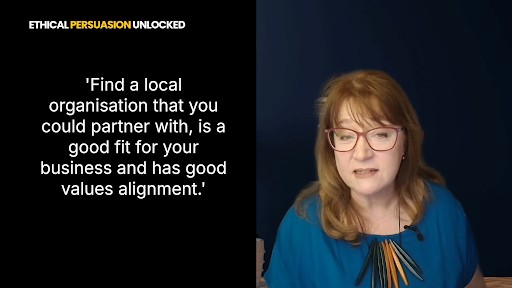
Yeah, yeah. Well, for those in other countries there what I might just suggest is you will have your local government organisations that have their registers for charities. So please do, your own due diligence in that way. But my suggestion for you is find a a local
organisation that you could partner with that is a good fit for your business and has good values alignment. Just make sure you do your research and don’t be afraid to ask you know questions of them. I’m sure they’d be very happy to have a conversation with you. For Australian businesses, as I said we’ve we’ve got over two million small businesses in Australia. And you know while I was working at the charity I really did notice that there was a real gap in the market for
support for small businesses to make a difference. And I found a lot of them were doing it and they were quite generous, but they just weren’t leveraging it well, they weren’t talking about it, and there was a lot more opportunity for them in their business to do it. So Dovetail really was born out of my experience working, you know, in the charity sector and seeing so many of our supporters who were donating personally and not through their business. So what I saw was that they just needed some support and guidance to learn how to fundraise
through their business, what are the activities that they can do? So that’s a big part of what we do. Identifying a good charity fit, making sure that it is aligned with their business, with their values, and it makes sense for them and for their customers and employees as well. And then helping them align it to their business goals because we don’t want to just create extra work. Small business owners are busy, they’re under the pump. So we want to come up with strategies that are going to be
things that are going to support their business growing and being successful as well. And then the third part is really making sure that they leverage that, that they can actually utilise that partnership to help their business, help their employees, help their customers and help the charity. So telling the story is a very big part of that. So we do curate a lot of those impact stories to be able for them to share out to their communities.
Patrick van der Burght (58:06)
Okay. And so if people want to get involved with you, where do they go? What does that process look like?
Kirrily Graham (58:12)
Yeah, so please feel free to connect with us through our website, dovetail.au. very simple. And you can also if you’d like to follow us on our social media channels, we’re on pretty much everything but TikTok. And of course if you’d like to reach out to me on LinkedIn I’d be more than happy to connect, but please do just send me a message to say that you heard Patrick and I speaking today because I do get a lot of requests. So unless I
get a personal message I may not accept. So yeah, but I would love to connect if you did hear hear us here today.
Patrick van der Burght (58:46)
And you also have a a TED talk, I think, on your website, that you encourage people to have a look at.
Kirrily Graham (58:51)
Yes, so I mentioned before about the Dan Pallotta TED talk that I that was, instrumental in me going down this pathway. I actually have that on the homepage of my website. So if you’d like to really have your thinking challenged around how charities should operate and would like to be inspired, please, yeah, jump on the homepage and just scroll down a bit. It’s a little bit further down on the page.
Patrick van der Burght (59:14)
Wonderful. All right. Well, thank you very much for your time and your insights. I think this is a wonderful opportunity for businesses to have a positive impact to the world and communities. And what a wonderful way that you can also in return benefit from that and help both parties grow. So thank you very much for joining us.
Kirrily Graham (59:40)
Thanks, Patrick. It’s been a pleasure.