Instantly fell in love with his content, and one of the principles in particular was my aha moment where I was like, that one right there, that sucker is the root cause behind every one of these behaviour issues that I’m experiencing.
Patrick van der Burght:
Can use that intake form for something, you know, to sort of set us up or empower some ethical strategies to be more persuasive and successful later in that appointment.
Dr Chris Phelps:
Just adding that one question as part of my new patient questionnaire before they got to us and not changing anything else, we saw acceptance of treatment rise over
Patrick van der Burgh:
It creates more loyalty. So then that you have playing for you, as in people will be more loyal coming back to you in the future, likely also referring other people to you.
Dr Chris Phelps:
Your environmental cues can shape your mindset as well. So whatever they’re coming into the situation with, if it’s stress, for instance, then we want to try to make them feel relaxed as much as possible.
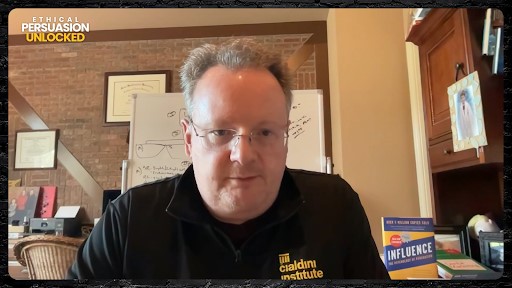
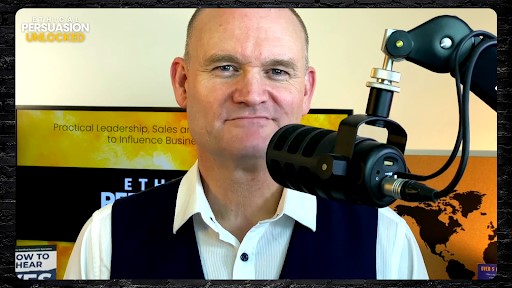
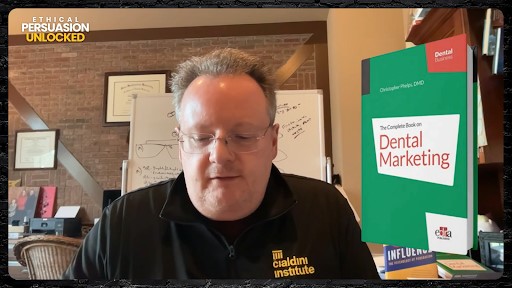
Today I’m joined by Dr. Chris Phelps, dentist, entrepreneur and CEO of the Cialdini Institute. Chris is an internationally recognised expert in ethical influence and persuasion. He’s a Cialdini Method Certified Trainer, trained directly under Dr. Robert Cialdini. He’s also authored two Amazon bestselling books on growing a dental practice and marketing.
And the founder of several successful companies, in the dental and healthcare space, including Golden Goose Scheduling, the Phelps Institute and the Careful Dentist. With this unique combination of clinical experience, behavioural science and business strategy, Chris’s has helped countless of practitioners improve patient communication, case acceptance and practice performance.
As I’ve said before, when it comes to the lessons of persuasion, application stories or case studies, it is not about the setting or the industry. It’s about dealing with people. You will be able to use what you hear here today in any industry. That said, health practitioners from any modality will easily relate to the nuggets of persuasion gold shared in this episode.
Chris Phelps touches on pre-esuasion, which I will expand on in a later episode, and how using that in the clinic environment produced a 33% increase in treatment and/or case acceptance. We touch on patient intake forms and how well formulated caring questions help the Principle of Consistency to increase follow through rather than inaction. A powerful strategy that nearly all businesses can use. You don’t want to miss any of this. Let’s dive in.
Dr Chris Phelps:
Yeah, my pleasure, Patrick. I love technology. We can be on complete opposite ends of the world, and yet here we are.
Patrick van der Burght:
Here we are, wonderful. Okay, Chris, how did you discover ethical persuasion and how did you end up training with Dr. Cialdini himself?
Dr Chris Phelps:
Yeah, great question. I’d like to say I was just really smart and knew that this guy was the authority. But like most things in my life, I have to learn them the hard way. So it all came about when I started a dental practice with my, joined my wife’s dentist, who had been her dentist since she was 14, in a little town called Matthews, North Carolina.
And bought in as a partner and my partner was really good about letting me spend our money on my marketing ideas to get ourselves opportunities.
I had hit my initial financial goals, I had multiple offices, all these things I’d kind of set out to do. I had this mindset of growth for growth sake, right? Well, when my second son was born, my wife needed me to be home more to help sleeping wise and whatnot. And I realised at the time, because I was still doing clinical dentistry five days a week, I was still running all the operations, making the decisions for those four practices, as well as doing all the marketing for them and team management that finally my cup of had overflowed, as they say.
And I realised sadly that while I was successful in some degrees, I’d actually trapped myself in my own business. And that was not a good realisation to discover it because I had no margin of time. So I knew I had to do something bold to get back that time. So I decided to sell my two best offices, highest producing least amount of debt offices. So the most profit.
And me and my original partner took over the two worst practices. So we just signed the debt over onto those. So we kind of cashed out our equity and freed up our partners to be happier elsewhere. And he and I took over the two worst ones. And there’s something amazing that happens when you take over your two worst practices, Patrick. You suddenly realise how bad they are. And prior to that, having three other offices and three other people in this business with me as partners, you know, one struggling practice in particular at the time was costing a 70,000 a month in expense, but only bringing in 35,000 a month in revenue.
Well, with other successful businesses and partners, it’s a project, it’s an investment, we’re gonna get it there, right? When you’re down to one other business in this crappy practice, if you will, the one that’s struggling, that’s a problem, okay? And something you can’t ignore anymore.
My challenge was that I couldn’t figure out what the root cause of the problems were. Right? And your brain, if it doesn’t understand the root cause, we’ll keep procrastinating or ignoring the problem. So luckily, you know, I had issues with patients. So why aren’t patients returning for treatment when they needed it? They needed treatment, right? We showed them the x-ray. We show them the picture of their broken down tooth, right? Should have been easy, but they’re not moving. They’re not coming back.
Why is my team, you I worked two days at each of the two locations, so I kind of rotated. Well, when I was there, the team did their job. When I wasn’t there, as they say, when the cat’s away, the mice will play. So they weren’t doing their job. So in my mind, I’m thinking, why do I have to keep telling them to do their job? And these doctors that worked for me, my associate doctors, I kept paying for their education and they didn’t come back and use their education. They didn’t create new services or new billings for the patients like they could have, okay?
So all these behaviour issues going on and I couldn’t put my finger on the root cause, which is why we didn’t do anything. Fortunate for me, not because I was smart enough to figure it out, but a friend of mine asked me if I wanted to go to a business conference with him. And I was like, yeah, sure, why not?
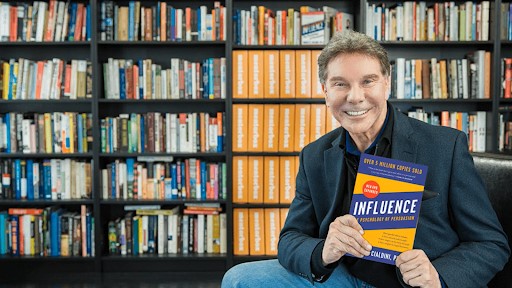
And so I Instantly fell in love with his content, and one of the principles in particular was my aha moment where I was like, that one right there, that sucker is the root cause behind every one of these behaviour issues that I’m experiencing. Okay. So I knew this guy was an expert. He was an authority in this and why people really do what they do. And here I was this whole time making my business strategies off excuses patients gave me, such as the excuse of you’re too expensive. Well, the strategy was, I guess I got off the discount.
Right? Do value myself? No, no, this guy’s talking about something else, something else people are using to really make their decisions. And I thought, maybe this guy’s got the path. He’s got the way. So I sought him out and learned from did trainings with him. I they had a certification program signed up to become a trainer, got accepted as the only person in healthcare that he was recommending, and got to train under him and our lead trainer, Dr. Neidert for over a year, and then was able to go back and take this behavioural science research that I had learned over that year and put it into practice in my two practices.
As my laboratory, if you will. Hey, it kind of worked in this behavioural science study. Let me try it over here with my patients. Let’s see what happens. And lo and behold, it did. It worked. So those two struggling practices ended up doing more in everything, revenue, profitability, my free time, than what I had for. And without those principles, there’s no way I can claim that that would have happened.
Is money even going to be around? Nobody knows. So despite this uncertainty in our environment and people not willing to spend money, we’re still having record volumes of growth in each of the dental practices three years in a row. So it showed me these principles, regardless of the economy or the environment around you, when you make your strategies around what people use to decide, nothing else matters.
Patrick van der Burght:
Yeah. And it’s, it’s, think important to realise for those listening that of course, yeah, you’re telling us about your journey and in the dental practice, but the setting of, you know, what you discovered and the pain points that you had, you know, we, see those in other industries as well, right? the same situation or what you’re explaining here can be applied to any other business. The setting, as I often say,
It’s completely irrelevant. It’s not about the business setting. It’s about that we’re dealing with people. Okay, awesome. yeah, tell us more. How did that sort of translate? Can you give us some examples of some of the principles that you use or how you translate it into strategies and what results that that brought?
Dr Chris Phelps:
It is.
If you don’t get them to refocus on what they value around those things, then the mindset they’re coming in with is distracting them from what you’re going to talk about or directly competing with what you want to talk about. Either way you lose. So literally the door to yes is already shut. And unless it’s a top of mind pain point for that person, it is very hard to influence that door back open. Right? So I didn’t realise how many times the door was being shut in our face with these conversations with our customers because of that.
The mindset wasn’t there. So I realised I had to do something to get people in the right mindset mindset. Well, one of the things we’ve learned is, yeah.
Patrick van der Burght:
Can we just, ⁓ sorry Chris, just for, because pre-suasion is a new term that I haven’t covered in the previous episodes yet. just to clue people in a little bit, pre-suasion is what you expose someone to to get them in the right mindset before you actually deliver your persuasive appeal. So it’s something that comes before. Yeah.
Dr Chris Phelps:
Yes.
Exactly. Think of it as like priming the pump for yes, if you will.
One of the studies Dr. Cialdini talks about in his book, Pre-suasion, is that people come in to a grocery store and get surveyed to see if they want to try this brand new soft drinking soda. And, but to do so, they have to share all their personal information. So their email, name, phone number, home address, whatnot. Well, not shockingly, the majority of people, so over 83% of people are like, no thanks, I’m not doing that. Right?
So very small percentage, only said yes, only like 17%. Well, in the next group, they thought, well, what mindset is somebody gonna be in who does say yes to trying this new thing? And they came up with a word to crystallise it and the word was adventurous. So in the next part of the experiment, they asked people coming into the grocery store, hey, just quick survey of our customers. Do you consider yourself to be adventurous? Yes or no? Well, yeah, mean, surprisingly, but…
Patrick van der Burght:
They say yes.
Dr Chris Phelps:
Not surprisingly, 100% of people said yes, they were adventurous.
So there’s something right there. But because they made that statement now, that’s now the mindset they’re in. So about 10 or 15 minutes later, a different group of researchers came up to them and asked them the same request as the first group. We got this new soda, soft drink, we’d love for you to try. Just give us all your personal information. Well, we know 83% said no the first go round, right? So only 17% % said yes.
How many with the mindset of adventurous said, yes, I’ll try your new soda. And the answer is over 75%. So the vast majority of something like 76.4% or something like that. Okay. Well, what that does is it shows you the power of when people are in the right mindset, they’re coming in, they’re presuaded. They’re now even more likely to say yes to the request you make.
So for my dental patients, for instance. Yeah, so back to my dental patients, then I had to come up with a word to kind of mirror that study. And in my world, we work on the consequence of doing nothing. Okay, so we use scarcity in an ethical way, presenting treatment to patients, because everybody has that choice, do nothing, but there’s always a cost, okay? Time, money, pain, things you value.
Patrick van der Burght:
Wonderful. Thanks for elaborating.
Dr Chris Phelps:
It is always in people’s best interest to do something today than waiting to do nothing. So I know I’m going to use kind of scarcity and the consequence of doing nothing. This cost is one of my main persuasive arguments. So I decided to back it up. What mindset do I want somebody to be in who is sensitive to a consequence message and wants to avoid consequence? And the word I came up with was proactive. So that’s a question we now put in front of our patients before they get to us. When it comes to your oral health, Patrick, which do you prefer?
Do you prefer to be reactive? Right? Because if you’re not proactive, then you’re the opposite. Do you prefer to be reactive? Someone who’s okay letting it go today, even though it’s going to cost you more time, and pain. Or would you prefer to be proactive? Jumping on something today, getting ahead of it before it costs you more time, and pain down the road. Choose. And now when they answer this before they get to me, what I found is like what the study suggests, the overwhelming majority say they prefer to be proactive.
Well, that’s a much better mindset now to present to than somebody who is looking to their past and how they’ve always been reactive when it comes to making these decisions.
Patrick van der Burght:
So how did that translate in terms of getting more people to follow through with the treatment recommendations that you were suggesting?
Dr Chris Phelps:
Yeah, I mean, in my own clinics, Just adding that one question as part of my new patient questionnaire before they got to us and not changing anything else, we saw acceptance of treatment rise over 33.5% per clinic, by the way. One small, big, if you will, one small change, but it opened up a lot of doors. So what that showed me was how many times we were getting no previously because the mindset was wrong.
The mindset was competing with what we wanted to talk about.
Right, or distracting them from. Get people in the right mindset, automatically they’re more favorable and you’re more likely to get a ‘yes.’
Patrick van der Burght:
Because they might be stressed in traffic, upset, they might be running a few minutes late, they’re stressed because of that, now they’re sitting in your clinic going in with that mindset. Would you say that’s also a reason why it might be a good idea to have people sit down, enjoy a little drink before going into the clinic, those sorts of things?
Dr Chris Phelps:
Yeah, I mean, we want to expose them to different triggers in their environment, because your Environmental cues can shape your mindset as well. So whatever they’re coming into the situation with, if it’s stress, for instance, then we want to try to make them feel relaxed as much as possible. So if they come into my waiting room, for instance, I don’t want them to think of this as some sterile clinic that’s cold and isolating. I want them to feel like family.
So they should see pictures on the wall of me and my team and our families together. And cause when you go to somebody’s home, isn’t that what you see on the walls? Families, family photos, family, whatever’s okay. So it should look like somebody’s living room, not somebody’s cold, sterile medical waiting room. Right. So automatically there should be a different smell in the area. Okay. So the sense in that environment, the music that they’re hearing, can all be geared towards
I call it the buffer zone, like erasing the mindset they’re coming in with and get them refocused on a new mindset here in this moment.
Patrick van der Burght:
Awesome.
We can use that intake form for something, you know, to sort of set us up or empower some ethical strategies to be more persuasive and successful later in that appointment. I know you’ve got some very specific, you know, strategies you implement there. Would you like, would you mind elaborating on that? And then if you don’t mind sharing that story of how you, basically you got the whole team trained. I mean, what I’ve…
often have is, you know, somebody might be excited and learns about, ethical persuasion science, how big an impact that can have on their life and their business. And so they learn it as in they’re the person talking, but you know, as in most businesses, there’s a team environment. And I know that example of the intake form and how the receptionist plays in with that is a brilliant example of how when you train your team to all play the same game basically in terms of trying to find that information that can have a big impact. Would you mind diving into that for us?
Dr Chris Phelps:
Yeah. So going back to that intake form, so asking that question, proactive or reactive is a powerful question that I ask. You know, what most people don’t realise is when they’re presenting the pros and cons of anything to someone, your option, whatever that is, okay, you’re tying those pros and cons, the positive and negatives of that item to what you think they value, right? Which means more often than not, you’re really tying it to what you value in that moment, because that’s what you understand the most, right?
And as we like to say, when you assume you know what somebody values, assume is not a good word. You make a, you know, what is the old adage? You make an A-S-S out of you and me when you assume. So in essence, we’re all guessing what this person values. So my whole thought was using this intake form was instead of guessing, why don’t I just ask them? So we often find ourselves in situations like, you know, somebody comes in with a single issue today, a single tooth hurting, but I look in their mouth and see a whole mouthful of problems.
The dilemma from our point of view as the dentist is, I just focus on the one thing you’re here for? Or do I ethically and morally should talk about everything and give you a plan for everything? Whether you want to hear it or not, what do you do? Well, ask it in your intake form. If this scenario happens, which would you prefer, this or that? Is this person a same day dentistry patient? Meaning if I see an issue and I’ve got time to fix it today?
Patrick van der Burght:
Very nice.
Dr Chris Phelps:
Are you likely to say yes? Because if you’re like me and I’m in my own dental chair, if I’m not doing it today, it’s not happening because I made the time today, right? Versus if it’s my wife in your chair, right? Or my chair and she didn’t plan for it today. It’s not in her schedule. It’s not happening today unless it’s painful, right? Pain trumps everything, but we’re talking about non-pain situations, which is the majority of the time. So which are you?
Are you a same day or do you need to schedule it out into your own schedule, your own timeframe? Ask it in the questionnaire in the intake form. Is this a, would you like to prepay and save or do you need to break it into monthly payments to fit your budget? Right, so there’s all kinds of questions that you can ask and I like framing it as a this or that, reactive or proactive. Prepay and save, pay monthly payments, right? And ultimately, you’re not guessing anymore. They’re literally telling you everything that they value.
So this liking principle comes into play and liking is all about finding connections and similarities to people. ⁓ you do this, I do this. You got two kids, I got two kids. Well, having these conversations with patients and your customers, trying to suss out what connections and commonalities you have is very time consuming, right? And again, in a more efficient clinic, there’s not a ton of time to do that. So in my industry and dentistry, it’s probably the most bungled principle of them all.
Nobody takes the time to find this information because they’re too busy. They don’t have time. Well, I realised again, I can get the information that I need. I can find the connection. I can discuss the connection with the person, but it doesn’t have to be me that does it. So what I did was I took the person who was patient facing before they get to me. I got my team involved and I said, hey guys, here’s everything I feel comfortable sharing about myself. Here’s my hobbies. Here’s my interests. Here’s the stuff I’m comfortable talking about with my kids, our animals, pets, vacations we go on, whatever.
So my team knows a lot about me and what I would like to talk about and what I’m talking about. So now I put it on them as their job is to be my detective. They’re supposed to interview the patient on my behalf and find the same. What connections do I have with them? And then they bring it to me and they say, Hey, Dr. Phelps, I got a new patient in room four. Yeah, she’s got two kids like you do. and she plays tennis too. Great.
Now I can walk in and be like, get introduced to the person and go, hey, I’m Dr. Phelps, nice to meet you. So Patrick, you got two kids, I got two kids. Tell me about your kids. Hey, let me tell you about mine. Hey, you play tennis, I play tennis. Let’s talk about tennis for a minute. So we can bring that connection up. Me taking the time to show this person that we have that connection and taking the time to formulate it to them shows that person that I like them. And now automatically when I show them that I like them first, they’re more likely to reciprocate and like me back.
So we can now build a solid liking foundation with them. And again, it’s just a small little thing that sets the stage that more people are going to say yes, because if it’s a friend asking now, somebody I’m connected to, I’m more likely to say yes versus if I didn’t take the time to get that connection, it may not go our way.
Patrick van der Burght:
And we can all recall, you know, you’re, know, in any situation, if you uncover, you’ve got something in common with someone else. You’re sitting in an airport talking and, wow, you know, you’re into golf, you’re into sailing. So am I. All of a sudden big smile and you relate to each other more. You just, you know, relax and you cooperate more and it’s a more pleasurable environment as well. Awesome. Cool. I know you’re so, I know I’m
I’m picking you for lots of your little treasures.
Dr Chris Phelps:
Yeah, so as we talked about sites, sound, smells are very important, right? The context of your environment can completely shape your mindset. So making sure it doesn’t smell like a dental office is important because especially if someone is a certain age and they’ve been around to other offices in the past, dental offices tend to have a unique smell. Well, they tend to associate their bad experience with that smell. So making sure it doesn’t smell like that is important.
But I also want to be very protective and strategic about the pictures up on the walls and the images, the video that they’re going to get exposed to on the television. Because we have televisions in each of the rooms that patients are treated in. So they’re sitting there for some period of time during their visit before I walk in and they’re exposed to something on this television, right? Well, if in the mistake most doctors make in my world is they let that person control the content of that television and thus what they’re exposed to.
Not realising that what they’re seeing in this moment is going to create a mindset in them that is either going to be favorable to what I’m going to talk about or be contrary to what I want to talk about. So the example I usually tell people is if my patient sitting there watching CNN or Fox News here in the States for 15, 20 minutes, and those people have been living off the scarcity and the consequence and loss of everything, right? And all they hear is negative, negative, negative, negative. the stock market’s down, Bitcoin’s down.
This is down. They’re thinking about all this loss in their mind. And then I walk in and say, ‘Hey, you need to buy this.’ No, I can’t do that. Didn’t you see what’s on TV?’ They’re probably going to war. I just lost all this money in my retirement today. I can’t afford that. Okay. So we let what they were exposed to in the pictures and images prior totally reshaped their mindset versus if I have them watching a television show, if I control the content and they’re watching a television show we call Fixer Upper on HGTV is the network that airs this.
It’s a home renovation remodeling show, right? It’s all about transformation, renovation, rehabilitation, like metamorphosis. Like somebody comes in, starts the show every time with a house, let’s say that they feel is worthless. It’s beyond reproach. They can’t fix it. Right. But with money, time invested and expert advice, what comes out of the backend? Something magic. And I’m like, Hey, wait a minute. Isn’t that what I do?
Patrick van der Burght:
Wonderful.
Dr Chris Phelps:
Isn’t that what we as healthcare providers do with our patients with money, time and expert advice invested? So which mindset would you prefer them to be in? The CNN, Fox News, the sky’s falling mindset or renovation, rehabilitation? It’s not too late. This can be redone or rebuilt or improved upon. So being very cognisant about what people are exposed to before you walk into the situation is extremely important. It’s either set in the stage for a ‘yes,’ or setting a stage for the ‘no’ to whatever you’re about to ask.
[chapter time="28:46" title="The Impact of Ethical Persuasion on Patient Experience" thumb="https://ethicalpersuasion.com.au/wp-content/uploads/2025/11/ep8-frame13.jpg"]Patrick van der Burght:
Yeah. And do you know those, there’s old fashioned games where, you know, you’ve got a whole bunch of nails sticking out and you put a marble in the top and the marble, you know, lens on one of the nails and goes left or right. often picture, you know, our businesses as one of those games, you throw the marble in the top and you hope that it goes, you know, based on every nail, but based on every,
fork in the road that it moves towards, ‘yes,’ but if we leave it to chance, we might end up somewhere in the middle or if we don’t use our language the right way, we might actually actively, subconsciously and very effectively coach people not to do what we want them to do. And they end up more towards the ‘no.’ So it’s all these little moments of truth where you have an impact on moving people towards that ‘yes.’
or allowing them to move towards that ‘no.’ And if I can just circle back to, I mean, in that intake questionnaire, asking people, are you the type of person that would rather take care of things immediately if we have the time for it? Or would you rather let it sink in and come back for a subsequent appointment? I’m absolutely the first kind, by the way. I don’t like going to the dentist all that much. I So when I’m brave enough to go, let’s get it over and done with. But I mean,
I mean, how ethical is that to actually care enough to ask someone what they value and then in your proposal, bring that to the surface, aligning perfectly what they actually want.
Dr Chris Phelps:
What’s funny you mentioned that because in my own practice and clinics, I’ve had dentists here in the States that have sent me testimonials that when they implement this new new patient intake form to their patients, they get more five star reviews from the patients because of that form specifically calling it out. And that’s exactly what the patient said. They said, this place actually cares about what I want. I felt like I was a part of the decision making process.
So, you know, we talk in our, one of our principles is unity and about co-creation, right? When people feel involved in the process of choosing their path, they’re way more committed to that process now as a result. And you being in the same boat as them, asking this request to do it, they’re more likely to say yes. So by asking what they value, they feel like you care more and they’re right, cause you do. They feel more in control of their destiny, like they have a choice.
And they feel united because now they’re a part of this process of where their treatment’s gonna go. What’s the plan gonna look like for them?
Patrick van der Burght:
Yeah, and the principle of unity, also, when we have that feeling of unity between us, It creates more loyalty. So then that you have playing for you, as in people will be more loyal coming back to you in the future, likely also referring other people to you. And it also increases their, you could say forgiveness, right? If something doesn’t go quite right, some people, oh, you know, they’re, you know, protest immediately, where when you have that unity, you’re far more like a team and it creates a much nicer environment.
the mice don’t play. I think that’s very insightful and I think it explains really nicely how ethical persuasion can be used to create changes from within. Would you mind elaborating on that.
Dr Chris Phelps:
Right.
Yeah. So oftentimes when we say this word influence or persuasion, and sometimes people have a negative connotation to that word, right? Especially persuasion in the States. Truthfully, influence by definition is just any action that gets people to change their behaviour. So it’s kind of this top level category phrase, influence. And in this, under this category of influence, there’s all kinds of subcategories that can influence that change in people’s behaviour,
persuasion is one of those things on one of the spectrum. Okay. You could persuade them to change. Money, bonuses, incentives can get people to change people’s behaviour. Family, religion can get people to change people’s behaviour. But on this other end of the spectrum, opposite of persuasion are some things that persuasion kind of gets lumped into. It kind of gets a bad rap. Things like manipulation, coercion, intimidation, hierarchical authority, your boss or somebody in charge of you telling you to do something.
And all those things have something in common. So coercion, manipulation force, somebody telling you to do stuff like a boss. And the thing they have in common is simply this. You don’t really feel like you have a viable choice. Now, I guess if somebody puts a gun to your head, do it or don’t, yeah, you had a choice, right? Do it or die. But you see, it’s not a viable choice. You don’t really feel like you have a choice.
So at its core, what it means is you don’t really feel like you’re in control, somebody else is in control of you. If you’re out of control of the situation, that’s when it’s manipulation, coercion, force, intimidation, people telling you to do stuff. Persuasion by definition, this is why it’s at the opposite end of the spectrum, is all about giving people choices. We’re not putting a gun to anybody’s head. People still have free will, they still have a choice in the manner, therefore they’re in control. So this is why I say that analogy, when the cat’s away, the mice will play.
What that’s speaking of the cat in that example is the coercive force, the threat, right? The manipulation telling you to do something, that boss. So of course, when that threat is there, you’re gonna do the behaviour. The mice are gonna do their job. But when the cat’s away and that threat’s gone, because they’re back in control, this is why the mice do a different behaviour. They play. When you truly influence and persuade, that’s when I said, then when the cat’s away, the mice don’t play. The behaviour stays true and continues on.
Why? Because they chose that behaviour. It wasn’t chosen for them.
It came from within them. We just made the truthful, genuine facts within the situation. We brought that to the surface for them to make a decision about. And if what we’re proposing is not right for them, right? Even it doesn’t serve them, then you’re not going to get a yes anyway. It’s not, you know, it’s not, doesn’t persuade a hundred percent of, you know, change, change the opinions or behaviour of a hundred percent of the people. It’s just the way I put it. When you don’t use the science, you have, you know,
Dr Chris Phelps:
It did.
Patrick van der Burght:
You might make a certain amount of proposals or suggestions or questions. And if you don’t use the science, you get a small amount of cooperation, small amount of yeses. And if we do use the science and a lot of those situations where we didn’t get that yes, we didn’t get that cooperation, they could have been a yes, not all of them, but a much larger percentage than you think. So when we use the science, we allow those yeses to come to the surface.
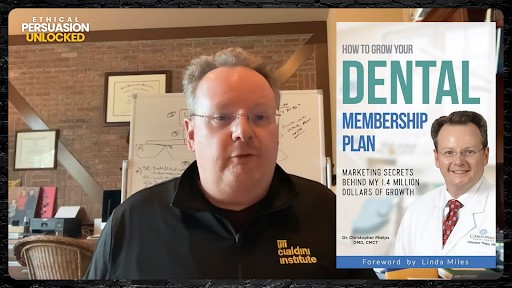
Wonderful, thank you for elaborating. Okay, great. So Chris, you’ve written two books, How to Grow Your Dental Membership Plan and the complete book on Dental Marketing. Would you mind explaining the difference between those two? And I understand one of those is actually a text book.
Yeah, so that first book was developed after I got invited to do a talk at a local retirement community. So we’re talking a community of 3,400 homes, people of the age of 55 and older that live there. They had retired from working their active independent living retirees, baby boomers, if you will, meaning they can come and go as they please, right? They don’t need somebody to watch over them health wise. And I got invited to do an educational seminar.
And I noticed that my first talk, I did a survey of the crowd. said, well, I’m just curious, no judgment, but how many of you in this group of 60 people have been to the dentist for any reason in the last year? And I was shocked that only 10 people out of 60 raised their hand. And I was like, wow, okay, that’s not good. Okay. How many of you have dental insurance? Just curious. Well, the 10 people that had been to the dentist were the ones with dental insurance. The other 50 did not have dental insurance. So now I’m seeing the obstacle and the barrier in front of me. I’m like, okay.
Well, how many of you would have gone to the dentist had you had insurance? The other 50 raised their hand. I was like, because when in the States, when people retire, most of the time when they’re working, their company is paying for that insurance or they’re paying very little. Okay. When they retire, they lose their dental insurance. So now it’s on them to pay for it and to pay for a policy you’re talking about $600 or $700 a year. Well, when you retire and you’ve got all this money in retirement saved up this lump sum, a scarcity mindset kicks in.
You’re losing that every month and it’s not coming back. You’ve only got so much to live off of. You’ve got to make it all the way through, okay, to whatever your end is. And so when they feel that loss, they feel like they can’t afford to pay that $700 for insurance. So they don’t. But then the barrier becomes, well, I don’t have insurance so I can’t go unless it hurts or I’m in pain. So it kicks them into a reactive mindset, right? My thought was if I could give them something that gives them the feeling or the sense like they have insurance.
Maybe they would get over that and become more proactive again and get over that barrier. So that first book, I created a dental membership plan is really what it’s about. It’s basically a affordable dental discount plan. So in essence, Costco was kind of the company I modeled it after. You you have great savings at Costco, but you pay for the right to shop there. And Costco shoppers spend on average 247% more per trip than Walmart shoppers.
Walmart shoppers don’t pay for that right. Costco shoppers paid for that right to spend more, okay, because of the saving mindset. So the membership plan model was an affordable way to get the preventative care you need, your cleanings, the exams by the dentist, your x-rays, and a 10 or 15% discount off every treatment that we offer. Okay, that’s really what it was designed to do. And put it at a price point that in contrast, people can afford. So I priced mine at say a dollar a day. So $365 for the year.
So we’re talking half the price of what it would cost them to buy dental insurance policy. And in essence, they’re getting the same discounted rate, if not a little less off treatment, but it’s in the same ballpark. So I went back to that community the next month and presented that as an option. And lo and behold, I use that to build two of my practices, going to those two communities once a month, doing these educational seminars and using the membership plan model as the vehicle for growth that drove them into my office. And because they were plan members, they spent more.
They outspent my insurance patients and my cash paying patients in every clinic. So I created a software in a company and wrote a book on how to teach doctors how to do that, how to create this plan, structure it, implement it to their patients so they can service people that are not going to see any dentists for any reason because they think they can’t because they don’t have insurance. So it’s a way to put that control back in their lap and people tend to respond.
Basically, I try to identify the most important touch points in any business’s clients journey. And where do we drop the ball in this touch point? So how do we attract an unlimited quantity and quality of new clients who spend enough to justify what it costs us to get them? How do we get them to, so we’re attracting new clients. How do we get them to attend? Meaning how do we answer more phone calls? How do we schedule more appointments?
How do we influence people to show for that appointment? Because if they don’t show ultimately we spend more in marketing to replace them that inefficiency. If we get them into the office how do we influence acceptance? In our world of dentistry we call it case acceptance other people call this sales so what do do from an aspect to present our legitimate offerings to them and influence more people to say yes to something versus choosing to do the worst thing for them which is to do nothing. A consequence is going to cost them more time money and pain.
And after acceptance, we end with attrition, which means how do we hold on to our existing clients? So client retention, if you will. And if we have lost them for one reason or another, how can we attract them back? How can we reactivate them? Because if we keep more of our people, guess what? That means we don’t have to spend more marketing to replace them. So that’s really a textbook on this whole cycle of the client journey and all of the different touch points.
We in healthcare and every business for that matter, tends to drop the ball. And so where can we have the biggest influence in those four key areas?
Patrick van der Burght:
Yeah. And so that would be applicable. What’s in that book, regardless of what industry you’re in. But I would say, especially if you’re in a health related field, you’d be very easily be able to relate to where to what you hear and see in there. Because your setting is relatively simple. So I would imagine there’s lots and lots of examples that you can immediately apply. Even if you’re a doctor, surgeon, complimentary health practitioner. Yeah. Awesome. Okay.
Dr Chris Phelps:
If people want to know more or contact you, what would you advise them to do?
So if you’re interested in our newsletter or other things, just email me at chris, C-H-R-I-S @cialdini.com.
Patrick van der Burght:
Wonderful. And of course, if people are interested to educate others about persuasion science, do what we do. And then there’s of course, courses available for that as well. If people want to pick my brain, reach out to me. And of course, you can reach out to Chris directly as well. Okay, thank you so much for your time. I’m sure everybody’s listened to this, it incredibly insightful to especially hear those, you know, always those practical sides to applying ethical persuasion and how you
piece it together in your situation. yeah, I look forward to hearing from our audience, of course, how they’re piecing things together and applying it. Thank you very much for your time, Chris. It’s been a delight having you here.
Dr Chris Phelps:
Yeah, you’re welcome, Patrick. And just so for all our listeners out there, just know that Patrick is an excellent resource for you. Again, I wish I had the bandwidth to talk to all of you and help all of you, but I don’t. But that’s why I have people like Patrick working with us at the Institute to help us get this message of influence out there to the masses so that we can show you what principles are present in these situations and how to ethically apply them to your specific challenges.
And again, simplify your life, not add more complexity. So reach out to Patrick, you won’t be sorry.
Patrick van der Burght:
All right, thank you very much, Chris. Appreciate it.